PRODUCTS SEARCH
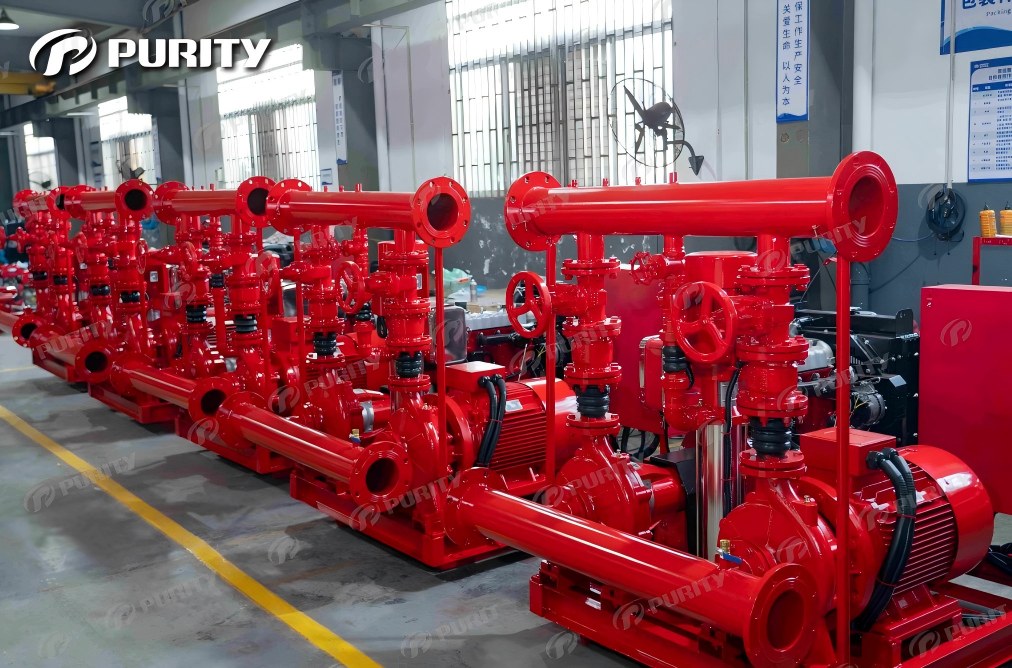
Picture|Purity Diesel Fire Pump System PEDJ
A diesel fire pump works by using a diesel engine to drive a fire pump and deliver water at the flow and pressure required for fire protection. When water pressure in the fire protection system drops, the controller signals the diesel engine to start. The engine then drives the pump, which draws water from a dedicated water source and supplies it to sprinklers, hydrants, or other fire protection equipment.
Diesel fire pumps are commonly used where electrical power is unreliable, insufficient, or where an independent power source is required. Understanding how a diesel fire pump works, its main components, and its design requirements helps ensure reliable operation during a fire emergency.
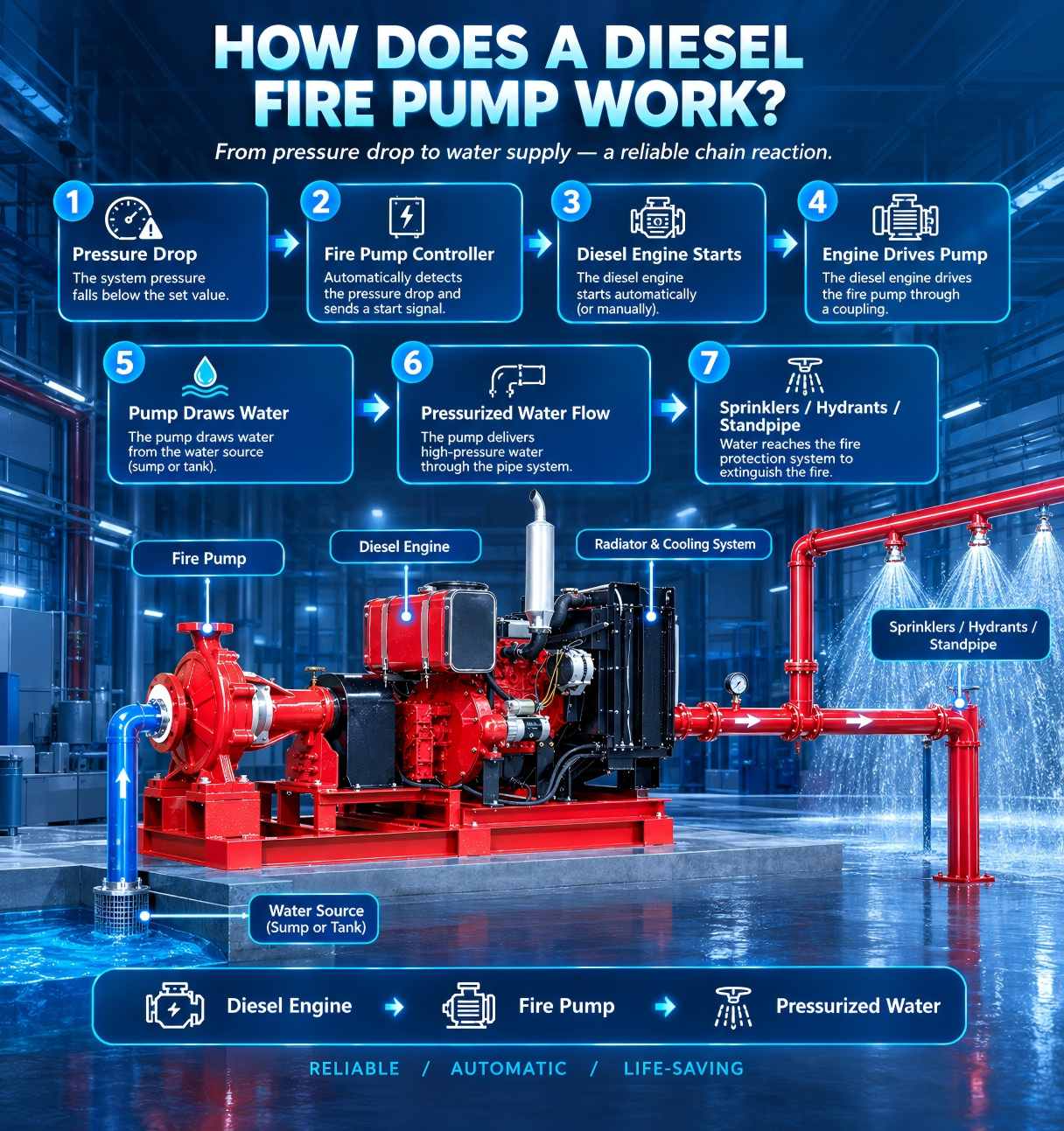
1. System pressure drops: When a sprinkler or hydrant system requires water, the pressure in the fire protection piping decreases.
2. The controller detects the pressure drop: The fire pump controller monitors system conditions and initiates the starting sequence when required.
3. The diesel engine starts: The engine uses a battery-powered starting system to begin operation.
4. The engine drives the pump: Mechanical power from the diesel engine is transferred to the fire pump shaft.
5. The pump delivers water: The pump draws water from the storage tank or other approved water source and increases its pressure.
6. Water reaches the fire protection system: Pressurized water is supplied to sprinklers, hydrants, standpipes, or other firefighting equipment.
In simple terms:
Pressure Drop → Controller → Diesel Engine Starts → Pump Runs → Pressurized Water → Fire Protection
This sequence allows a diesel fire pump to provide the water flow and pressure needed when the fire protection system demands it.
A diesel engine converts the chemical energy in diesel fuel into mechanical energy that drives the fire pump.
Most diesel engines use a four-stroke operating cycle:
· Intake: Air enters the cylinder.
· Compression: The piston compresses the air, significantly increasing its temperature and pressure.
· Power: Diesel fuel is injected into the hot compressed air. The fuel ignites and pushes the piston downward.
· Exhaust: Combustion gases are discharged from the cylinder.
The repeated movement of the pistons rotates the crankshaft. This mechanical rotation is transferred to the fire pump, allowing the pump to generate the required water flow and pressure.
Unlike a gasoline engine, a diesel engine compresses air before fuel injection. The high temperature created during compression allows the injected diesel fuel to ignite without a spark plug.
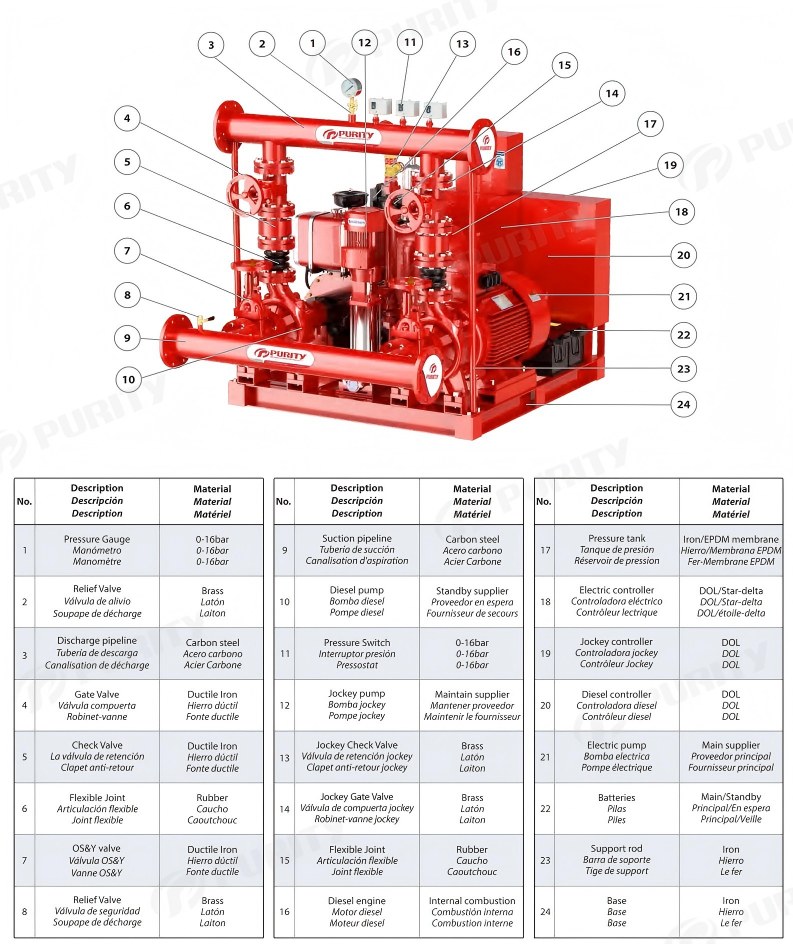
The diesel engine provides the mechanical power required to drive the fire pump. It is selected according to the required pump duty and operating conditions.
The fire pump increases water pressure and delivers the required flow to the fire protection network. Depending on the application, different pump configurations may be used.
The controller monitors system conditions and manages the engine starting and operating sequence. Modern controllers can also display important operating parameters and alarms.
The fuel tank stores the diesel required for emergency operation. Proper fuel quality, storage, and maintenance are essential for engine reliability.
Diesel fire pump engines normally use batteries and an electric starting system. Reliable batteries are essential because the engine must be ready to start when required.
The engine must be properly cooled during operation. Many diesel fire pump systems use a water-based cooling arrangement to remove heat from the engine.
The engine requires sufficient clean air for combustion, while exhaust gases must be safely discharged from the pump room. Proper exhaust design also helps prevent excessive backpressure and overheating.
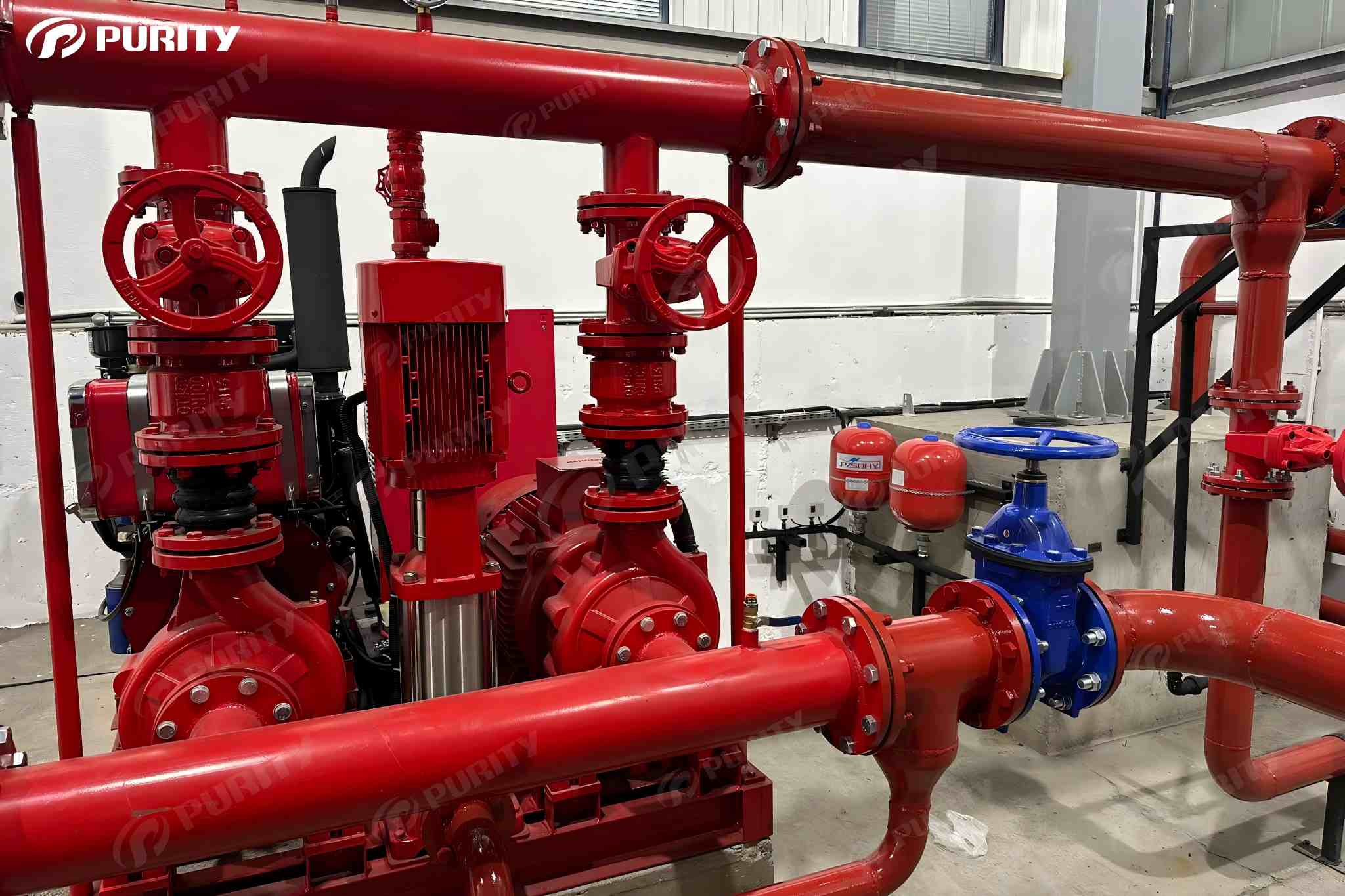
Diesel fuel can degrade during long-term storage. The fuel tank should therefore be properly sized, maintained, and regularly inspected to ensure that clean fuel is available when the pump is needed.
Diesel engines require sufficient clean air for combustion. The air intake system should provide adequate airflow while preventing excessive contamination from dust and other particles.
Combustion gases must be safely discharged from the pump room. Exhaust piping should be properly designed and insulated to manage heat and reduce the risk of overheating.
Diesel engines generate substantial heat during operation. An appropriate cooling system helps maintain the engine within its required operating temperature.
Temperature, ventilation, air supply, exhaust, and access to maintenance equipment should all be considered when designing the pump room.
Because a diesel fire pump may remain idle for long periods and must start during an emergency, the batteries, charger, controller, and starting circuit should be regularly inspected and maintained.
Diesel fire pumps are particularly useful when an independent power source is required or when electrical power cannot be considered sufficiently reliable for the application.
Typical applications include:
· High-rise buildings
· Industrial facilities
· Warehouses and logistics centers
· Large commercial buildings
· Manufacturing plants
· Infrastructure projects
· Areas with unreliable electrical power
· Fire protection systems requiring an independent backup power source
For large or critical fire protection systems, a diesel-driven pump can provide an additional layer of operational reliability because the pump is powered by a diesel engine rather than relying solely on the electrical grid.
The main difference between a diesel fire pump and an electric fire pump is their power source.
|
Feature |
Diesel Fire Pump |
Electric Fire Pump |
|
Power source |
Diesel engine |
Electric motor |
|
Grid dependency |
Low |
Higher |
|
Starting system |
Batteries and diesel engine |
Electrical starting |
|
Typical application |
Unreliable or limited electrical supply |
Reliable electrical supply |
|
Maintenance focus |
Engine, fuel, batteries and cooling |
Motor, controller and electrical system |
|
Backup capability |
Independent of the electrical grid |
Depends on available electrical power |
The appropriate choice depends on the building, water demand, power supply, local regulations, and overall fire protection system design.
Diesel fire pumps offer several important advantages for fire protection applications:
A diesel engine can drive the pump without depending directly on the electrical grid, making it suitable for applications where power reliability is a concern.
Diesel engines can provide the mechanical power required for demanding fire protection applications and extended operation.
Diesel fire pumps are widely considered for industrial facilities, high-rise buildings, and other installations where maintaining fire protection water supply is critical.
Diesel-driven systems can be adapted to different pump capacities, water sources, building types, and environmental conditions.
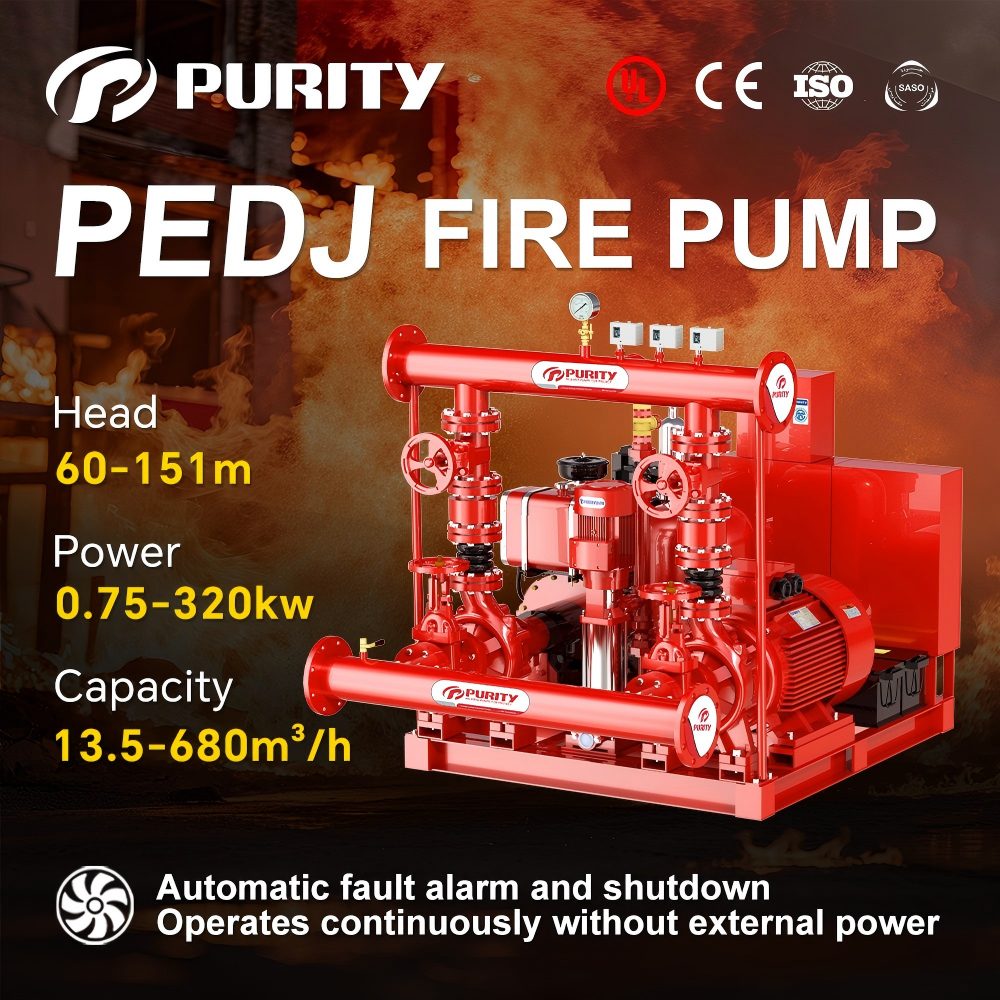
Purity diesel fire pump sets are available for different flow, pressure, power, and connection requirements. The PEDJ series, for example, can be configured for applications up to 2,500 GPM and 140 m head, with power options from 4 to 315 kW.
The system can also provide monitoring and control functions for key operating conditions, including engine speed, running time, battery voltage, preheating, delay settings, and alarm conditions.
These features help operators monitor system status and support easier inspection and maintenance.
A diesel fire pump starts when the fire protection system detects a pressure drop and the controller initiates the starting sequence. The diesel engine then starts through its battery-powered starting system and drives the fire pump.
The purpose of a diesel fire pump is to provide the water flow and pressure required by a fire protection system, especially when an independent or backup power source is needed.
A diesel fire pump can operate independently of the electrical grid. This makes it useful where electrical power is unreliable, insufficient, or where an independent power source is required.
Diesel fire pump engines use diesel fuel. Fuel quality and storage conditions should be regularly checked because degraded fuel can affect engine reliability.
Diesel fire pump engines typically use a dedicated cooling system to remove heat generated during operation. Water-based cooling arrangements are commonly used because water can efficiently transfer heat away from the engine.
Diesel fire pumps are commonly used in high-rise buildings, industrial facilities, warehouses, infrastructure projects, and other applications where reliable fire protection water pressure and an independent power source are important.
A diesel fire pump works by using a diesel engine to mechanically drive a fire pump, allowing the system to supply pressurized water when the fire protection network requires it. The controller, diesel engine, pump, fuel system, batteries, cooling system, and exhaust system must all work together for reliable emergency operation.
For applications where electrical power is unreliable or an independent power source is required, diesel fire pumps provide a practical solution for maintaining fire protection water supply.
Purity provides diesel fire pump systems for a wide range of building, industrial, and fire protection applications, with configurable flow, head, power, and control options to meet different project requirements.