PRODUCTS SEARCH
Fire pumps for sprinkler systems provide the water pressure and flow needed to help automatic fire sprinklers operate as designed. When the available water supply cannot meet a building's fire protection requirements, a fire pump boosts pressure and delivers water through the fire protection piping network.
Understanding what a fire pump does, how it works, and which type suits a project helps building owners, engineers, and contractors make informed decisions about fire protection systems.
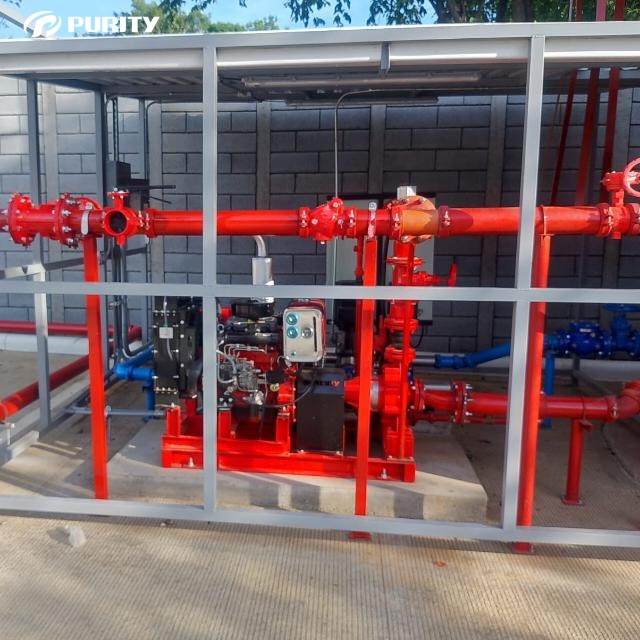
Picture|Purity Fire Pump PSD On-Site Project
A fire pump is a specialized pump designed to supply water at the flow rate and pressure required by a fire protection system. It typically draws water from a dedicated storage tank, reservoir, or another approved water source and delivers it to sprinkler systems, standpipes, or fire hydrants.
Fire pumps for sprinkler systems are particularly important in high-rise buildings, commercial properties, industrial facilities, and other projects where the available water supply may not provide sufficient pressure or flow.
A fire pump does not detect fires or independently activate sprinkler heads. In a typical automatic sprinkler system, heat activates the appropriate sprinkler head, water begins flowing, and the resulting pressure changes can trigger the fire pump according to the system's control design.
A fire pump works with the water source, piping network, control equipment, and sprinkler heads to provide the required water supply during a fire emergency.
The process generally involves four steps:
The exact startup sequence depends on the system design and applicable fire protection requirements. Correct pump selection and installation help ensure the system receives the water supply it needs.1.Sprinkler activation: Heat from a fire activates one or more sprinkler heads, allowing water to flow.
2.Pressure changes: Water discharge may cause pressure in the fire protection piping to decrease.
3.Pump startup: When the system reaches its configured starting condition, the fire pump controller initiates pump operation.
4.Pressurized water delivery: The pump draws water from the designated source and delivers it through the piping network at the required operating conditions.
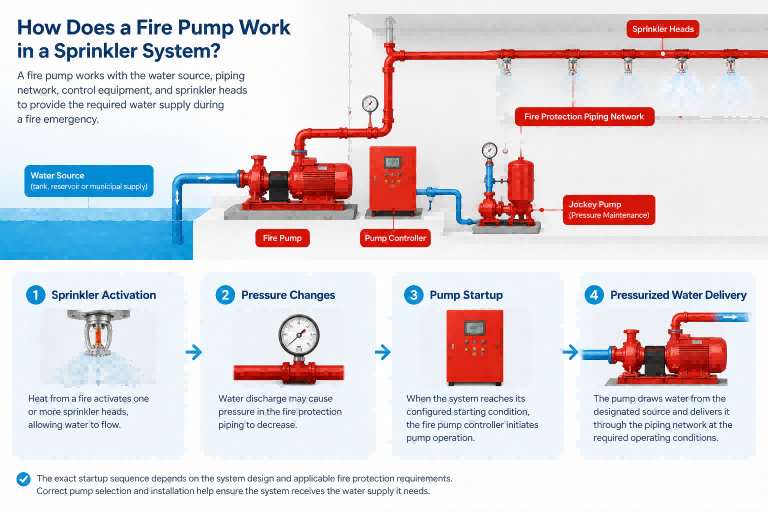
Picture|Working Principle of Fire Pumps
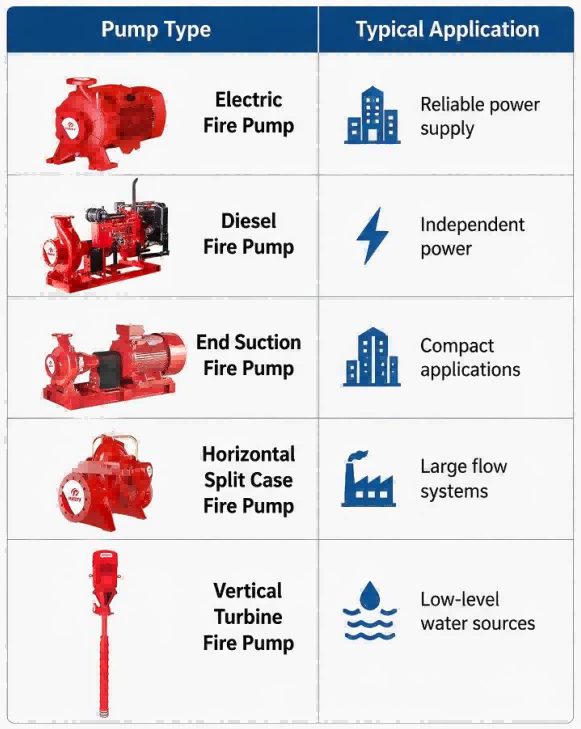
The appropriate fire pump depends on the required flow and pressure, available power supply, water source, and installation conditions.
An electric fire pump uses an electric motor to drive the pump. It is commonly selected for projects with a suitable electrical supply and can provide reliable performance when properly designed, installed, and maintained.
Selection considerations include motor power, electrical supply reliability, required flow, and discharge pressure.
A diesel fire pump is driven by a diesel engine and may be used where an independent power source is required by the fire protection design. Its supporting equipment includes fuel storage, starting batteries, cooling arrangements, ventilation, and exhaust provisions.
A jockey pump is a small pressure-maintenance pump used to compensate for minor leakage and normal pressure fluctuations in a fire protection system. It helps maintain system pressure and reduces unnecessary starting of the main fire pump.
The main fire pump supplies the required firefighting flow, while the jockey pump maintains normal system pressure. A jockey pump cannot replace the main fire pump during a fire emergency.
Not every sprinkler system requires a dedicated fire pump. The decision depends on the available water supply, building height, system demand, hydraulic calculations, and applicable fire codes.
A fire pump may be necessary when:
1.Municipal water pressure or flow is insufficient.
2.Water must be delivered to upper floors of a high-rise building.
3.Large commercial or industrial facilities require substantial firefighting water capacity.
4.The project uses a dedicated water storage tank or reservoir that requires pressurized delivery.
5.The overall fire protection design requires additional pumping capacity.
A qualified fire protection engineer should evaluate the water supply and system demand before determining whether a fire pump is necessary.
Regular inspection, testing, and maintenance help identify problems before they affect fire pump performance.
Key maintenance practices include:
1.Inspect the equipment: Check the pump, motor or engine, valves, piping, and control panel for visible damage, leakage, or abnormal conditions.
2.Test pump performance: Measure flow and pressure when required, and compare the results with the manufacturer's performance curve and applicable acceptance criteria.
3.Check the driver: Inspect electrical connections and power availability for electric pumps. For diesel pumps, check fuel, batteries, lubrication, cooling, and engine condition.
4.Keep maintenance records: Document inspection findings, test results, corrective actions, and servicing dates.
Testing frequency and procedures should follow the applicable local requirements and relevant standards, such as NFPA 25 for inspection, testing, and maintenance of water-based fire protection systems in the United States.
Selecting a fire pump involves more than comparing motor power or maximum head. Important factors include design flow, required pressure, water source, pump performance curves, driver type, installation space, and maintenance access.
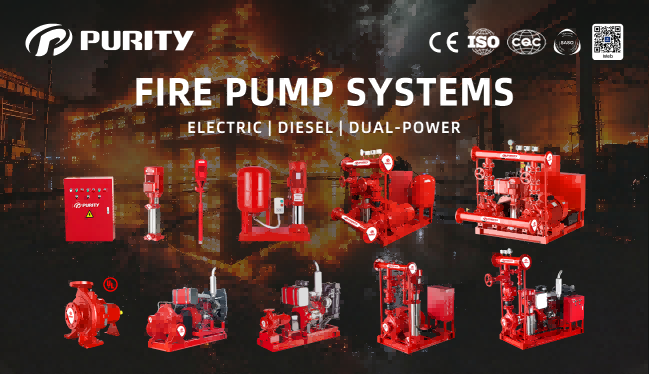
Purity provides fire pump solutions for different project requirements, including electric fire pumps, diesel fire pumps, jockey pumps, vertical turbine pumps, and horizontal split case pumps.
Founded in 2010, Purity has more than 16 years of experience in pump manufacturing and supply, serving customers in over 140 countries and regions. With more than 130 certificates and certifications, including UL, CE, and ISO-related credentials, Purity supports a wide range of water supply and fire protection applications.
Contact Purity to discuss your application and find a suitable fire pump solution for your project.
Its main role is to provide the water flow and pressure required by the sprinkler system when the available water supply cannot meet the design demand.
No. A fire pump is generally needed when the available water supply cannot satisfy the system's required flow and pressure. A qualified engineer should evaluate the project before selecting the equipment.
A fire pump supplies the required firefighting flow, while a jockey pump maintains normal system pressure and compensates for minor pressure losses.
Testing schedules depend on the applicable standards, equipment type, and local requirements. Follow the relevant inspection and maintenance schedule rather than relying on one universal testing interval.
An electric fire pump depends on a suitable electrical supply, while a diesel fire pump uses an engine-driven power source. The choice should reflect the project's fire protection design, power reliability, and applicable requirements.